
Ceramic Serving Platters: Easy Ways to Make Your Food Look Restaurant-Worthy
You cooked for four hours. The biryani is perfect, the raita is chilled, the kebabs came off the pan with a proper char. Then it all lands on the table in the same steel patila you cooked it in, and somehow it looks like
By Ravi Maddur7 min read

Why Ceramic Serving Platters Flatter Food More Than Metal
Ceramic does three things steel can’t. It holds temperature gently, so a platter warmed under hot water keeps parathas soft instead of sweating them. It doesn’t throw harsh reflections, so your camera reads food rather than glare. And it gives you a surface that acts like a frame. There’s a colour argument too. Most Indian food sits in the red-brown-gold range: gravies, tandoori marinades, fried snacks, halwa. Against steel that flattens into one warm blur. Against cream, sage or charcoal, the same food has edges. It’s why restaurants standardized on ceramic serving dishes decades ago.The weight thing nobody mentions
Good ceramic is heavier than it looks, and that’s a feature. Buying online, check the listed weight: a 14-inch stoneware platter under 700g is usually thin-walled and chips at the rim within a year.Picking Shapes That Actually Match Indian Dishes
Shape is where most people go wrong. Ceramic serving platters usually get bought in three round sizes, and then the table looks repetitive every single time.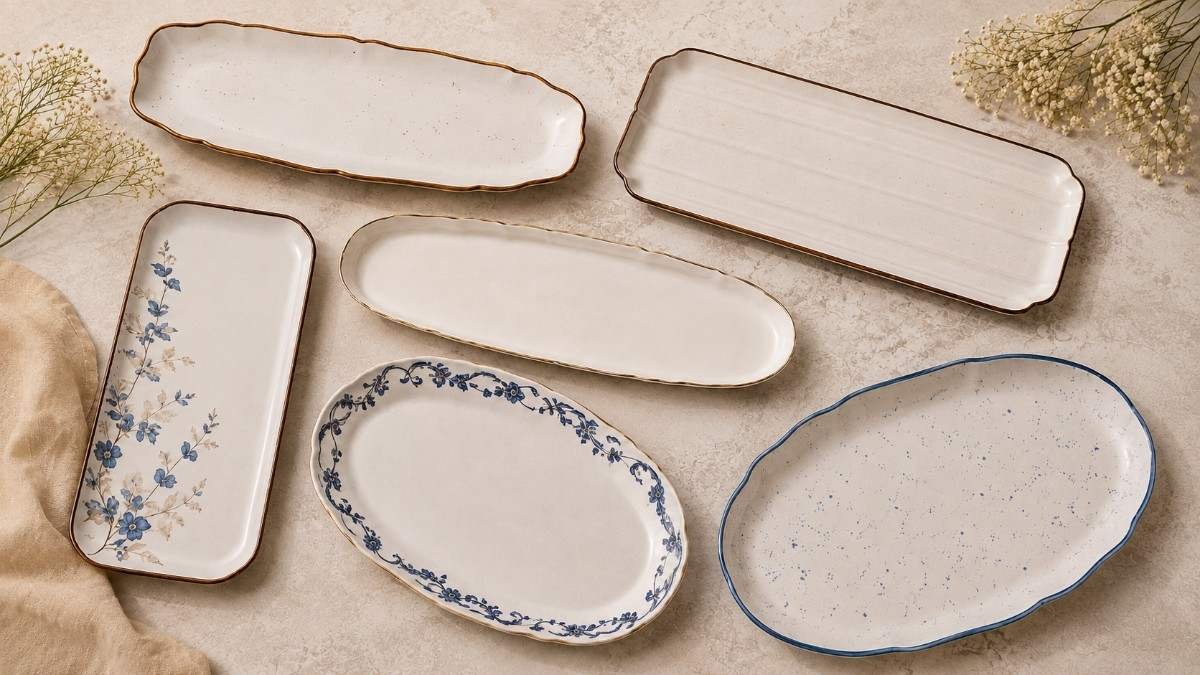
Rectangular and oval
Rectangular pieces are for anything laid in a row: kebab skewers, paneer tikka, dhokla squares, sliced fruit. The straight edge gives you a line to plate against, which reads as deliberate. Oval sits between round and rectangular and is the most forgiving shape for whole fish, stuffed vegetables, or a mound of pulao.Round and coupe
Round platters suit anything circular by nature: a stack of rotis, a ring of tikis, a cake. Coupe shapes, with a gently rising rim and no flat border, handle anything carrying a little gravy. A flat rimless platter and a rasedar sabzi is a bad combination you only make once.Sizing for real tables
| Platter size | Best for | Serves roughly |
| 8–10 inch | Starters, chutneys, dry snacks | 2–4 |
| 12–14 inch | Kebabs, rotis, sliced fruit, shared mains | 4–6 |
| 16 inch+ | Biryani, festive spreads, grazing boards | 6–10 |
Serving Platter Ideas for Everyday Meals
Special-occasion crockery that lives in a cupboard is wasted money. The best serving platter ideas are the ones you’ll use on a random Wednesday, which is also how ceramic serving platters justify their cost.- Use a mid-size platter as the roti holder instead of a casserole, lined with a cloth napkin folded over the top.
- Serve cut fruit on a shallow platter with a small bowl of chaat masala sitting directly on it.
- Put the evening’s chai snacks on one long rectangular platter instead of three bowls.
- Make one platter the dessert station so nobody hovers near the fridge.
Colour, Glaze and Finish: What Flatters Food
Reactive glazes, where the colour pools and shifts across the surface, look gorgeous in a product photo and can fight with your food. They work under simple items: plain rotis, grilled vegetables, a cake. They’re less kind to a busy multi-coloured spread. Solid matte finishes in off-white, sand, deep green or slate are the safest workhorses, and off-white is why ceramic serving platters photograph well. It reads as a neutral background and lets turmeric yellows and tandoori reds do the talking. Glossy white bounces lighter, so under a warm dining bulb it can look slightly yellow. On speckled stoneware the dark flecks hide the faint grey cutlery marks that build up over years, which is forgiving in a busy household. If you want stylish serving dishes that stay useful, that speckle is a quiet advantage.Food Presentation Ideas That Take Two Minutes
Restaurant plating isn't a skill, mostly. It’s a few repeatable habits. These food presentation ideas cost you nothing:- Leave a border. About 70 percent coverage looks generous; a full platter looks like a canteen.
- Build height in one spot. A small mound in the centre, or a slope from one end, gives the eye somewhere to land.
- Add one green thing. Coriander, mint, a curl of spring onion, a slice of lime. One colour break beats three garnishes.
- Wipe the rim. A tissue around the edge before the platter leaves the kitchen is the biggest single difference between home and restaurant.
- Use odd numbers. Five kebabs look better than four.
Choosing a Serving Platter for Guests and Festivals
A serving platter for guests has different demands from everyday crockery. It has to survive being passed around, sit stably, and look right next to the dinner set you own. Match the undertone rather than the exact colour. If your dinner plates are warm ivory, a cool bright white platter looks wrong beside them. If your plates are patterned, keep the platters plain. For Diwali or a puja spread, deeper glazes with no metallic detail photograph better under warm fairy lights than gold rims, which flare. Many households also prefer a dedicated set that never touches non-vegetarian food. Buying two or three stylish serving dishes specifically for prasad and festival use is common, and it’s easier to plan for than to improvise later. Keep those ceramic serving platters stored separately so the rule survives a busy kitchen.Care, Washing and Making Ceramic Serving Platters Last
Most ceramic serving platters sold today are dishwasher and microwave safe, but check the base marking rather than assuming, especially for hand-painted work.- Avoid thermal shock. Don’t move a platter from the fridge into a hot oven, and don’t pour boiling water into a cold one.
- Stack with a cloth or felt pad between pieces. Grit causes most base scratches.
- Use a bicarbonate soda paste on cutlery marks. Steel wool strips the glaze permanently.
- Store the large ones upright in a plate rack. Flat stacks put pressure on the rim.
Frequently Asked Questions
Are ceramic serving platters safe in the microwave?
Most plain glazed stoneware and porcelain platters are microwave safe, and the base marking confirms it. The exceptions are pieces with metallic gold detailing, hand-painted overglaze decoration, and crackle finishes. Keep those for cold or room-temperature serving, or warm them briefly in a low oven.What size platter should I buy first?
Start with one 12-to-14-inch piece. That size handles kebabs, rotis, fruit and a shared main course without looking sparse or overloaded. Add a smaller 8-to-10-inch platter for starters and chutneys, and only go past 16 inches if you regularly cook for eight or more.Do ceramic serving dishes chip easily?
Thicker stoneware resists chipping well; thin lightweight pieces don’t. Most damage happens in storage rather than use, when platters are stacked directly on each other or slid across granite. A felt pad between pieces and a habit of lifting rather than dragging solves most of it.How do I stop my platters looking mismatched?
Choose one undertone, warm or cool, and stay with it across shapes and sizes. Varying the form while keeping the colour family consistent looks curated; varying both looks accidental. Plain finishes mix far more easily than patterns, which is why a plain collection of ceramic serving platters outlasts trends.Conclusion
The jump from home cooking to a table that genuinely looks good is smaller than most people assume. It’s the right shape under the right dish, a neutral glaze that lets colour show, a wiped rim, and some empty space around the food. Ceramic serving platters do most of that work for you, which is why one or two well-chosen pieces get used far more than a full formal set bought in a hurry. Start with a mid-size platter, live with it a month, and let your hosting habits tell you what to add. If you’re unsure what suits your table, browsing a curated tableware range from Shokki Decor or talking with a knowledgeable seller narrows the choice quickly.Keep reading
Related stories

6 min read
Best Luxury Dinner Set Brands in India: Complete Buying Guide
A beautifully arranged dining table creates a warm and welcoming atmosphere for every meal. Whether you're enjoying dinner with your family or hosting guests for a special celebration, the right dinner set can make every

7 min read
How to Care for Bone China Cups and Plates Properly: Complete Maintenance Guide
Bone china cups and plates are more than just dining essentials—they bring elegance, beauty, and a touch of luxury to every meal. Their smooth finish, delicate design, and lightweight feel make them a favorite choice for

7 min read
Why Gold Rim Dinnerware Sets Are Trending in Modern Dining Spaces
Modern homes are no longer focused only on furniture and wall colors. Today, people also pay close attention to how their dining tables look. A beautiful dining setup creates a warm and welcoming feeling for family membe