
Tea Pot and Cup Set Online: A Simple Way to Upgrade Your Tea Time
Most of us make good chai and then ruin the moment. The tea gets strained straight from a steel pan into whatever mug is closest, everyone stands around the kitchen counter, and it’s over in four minutes. Nothing wrong w
By Ravi Maddur7 min read

What Actually Changes When You Pour from a Pot
A pot slows things down, and that’s most of the point. When tea sits on the table, nobody walks back to the stove for refills, so conversations run longer. It also keeps the brew hot for the twenty minutes guests actually linger. There’s a serving benefit too. Straining once into a pot means you control strength before it reaches the cup, which matters when one person wants strong Assam and another wants theirs milky and mild.Why Buying a Tea Pot and Cup Set Online Works in Your Favour
Physical stores stock what sells fastest, usually the same three designs in white. Online, you choose from full ranges, and you see the pot and cups photographed together instead of hoping they won’t clash.Reading a Product Page Properly
Photos are flattering. Specifications don’t. Check capacity in milliliters, the material name, and whether the listing confirms microwave and dishwasher safety. If a set gives only dimensions, sketch them against a mug you own. A 15cm-tall pot is bigger than most people picture.Checking the Spout and Handle
This detail separates a set you use daily from one that lives in a cabinet. A short, low-set spout dribbles. A handle set too close to the body gets hot. Look for side-angle photos rather than the styled overhead shot, and scan reviews for the word “drip”.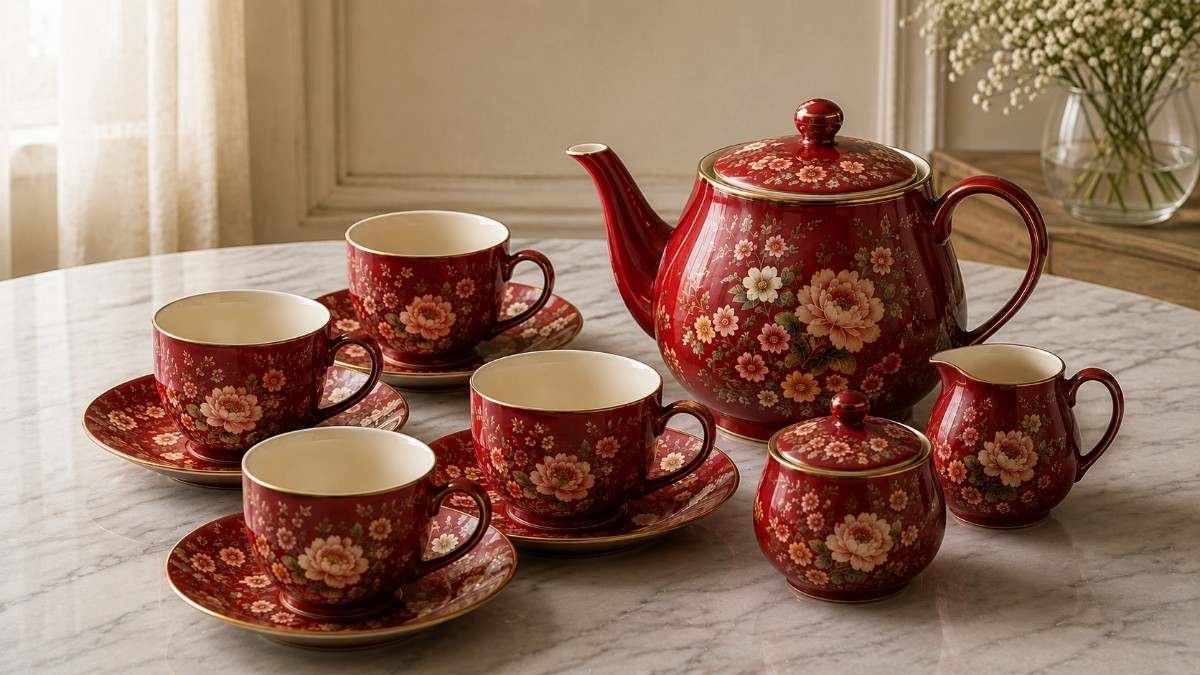
Materials Compared: What Suits Indian Homes
| Material | Feel | Heat retention | Best for | Watch out for |
| Porcelain | Smooth, slightly translucent | Good | Everyday plus guests | Sudden temperature shocks |
| Bone China | Lightest, most refined | Moderate | Occasions and gifting | Higher price, feels delicate |
| Stoneware | Chunky, matte or rustic glaze | Excellent | Casual chai, monsoon evenings | Heavy to lift when full |
| Glass | Clear, shows the brew | Poor | Green and herbal teas | Shows every fingerprint |
Getting the Sizing Right for Indian Chai Habits
Here’s where a lot of online purchases go wrong. Western sets are built around 200 to 240ml cups. Indian chai is usually served in 100 to 150ml portions, taken more often.Cup Capacity
Buy cups that are too large and people leave a third behind as it cools. Too small and you’re refilling constantly.- 100 to 130ml: traditional chai portions, closest to the cutting-chai habit
- 150 to 180ml: a comfortable middle ground for chai and black tea alike
- 200ml and above: better suited to green tea, herbal infusions or coffee
Pot Capacity
A 700 to 900ml pot serves four to six chai-sized cups without a refill, which covers most evenings. Anything above 1.2 liters gets heavy once full, and a heavy pot with a hot handle is how accidents happen. If you host six or more regularly, two medium pots beat one large one. Easier to carry, and you can brew two strengths at once.Building a Teapot Collection Without It Looking Random
A teapot collection sounds indulgent until you realize most homes end up with three or four pots anyway. One inherited, one gifted, one bought on impulse. The trick is choosing a thread that ties them together rather than letting them accumulate. Pick one constant: a colour family, a rim finish, or a single material. Then vary shape and size freely. A tall porcelain pot and a squat stoneware one sit happily on the same shelf if both are cream and gold. Where a teapot collection looks cluttered is when every piece competes on pattern.Choosing Tea Serving Ware Beyond the Pot
The pot and cups are the anchor. What surrounds them decides whether the table reads considered or thrown together. Useful tea serving ware to build up gradually:- A small milk jug, because pouring from a tetra pack undoes everything
- A lidded sugar pot with its own spoon
- A shallow tray, so you carry one thing instead of six
- Two small plates for biscuits, khari or namkeen
- A strainer with a rest, if you brew loose leaf
Styling a Tea Table Setup Guests Notice
A good tea table setup is mostly about height and restraint. Keep the pot slightly raised on a small tray or a folded runner so it reads as the center. Cups go in a loose arc rather than a rigid grid, because a grid looks like a hotel breakfast. Leave breathing room. Three well-placed items beat seven crowded ones. If you’re hosting during a festival or after a puja, one brass diya or a few marigolds near the tray connects the tea to the rest of the house. Late afternoon light near a window does the rest, and it’s when tea serving ware looks its best.Caring for a Tea Service Set So It Lasts
Tannin stains are the real enemy, not breakage. Tea leaves a brown film inside pots that ordinary washing barely touches. A paste of baking soda and warm water, left ten minutes then wiped out, clears it without scratching the glaze. A few habits that keep a tea service set looking new:- Rinse the pot soon after use instead of letting it sit overnight
- Warm a cold pot with hot tap water before pouring boiling water in
- Skip steel scrubbers entirely on glazed surfaces
- Store cups upright rather than stacked rim-down, to protect the edges
- Check whether gold or platinum detailing is microwave safe, because usually it isn’t
A Quick Checklist Before You Order a Tea Pot and Cup Set Online
Run through this before you pay. Cup capacity matched to how your household drinks. Pot capacity matches how many people you serve. Material chosen for use, not just looks. Spout shape visible in a side photo. Dishwasher and microwave notes confirmed in writing. Replacement cups sold separately, in case one breaks.Frequently Asked Questions
How many cups should a tea pot and cup set online usually come with?
Most sets ship with four or six cups, and six is the more practical choice for Indian homes where guests tend to arrive in pairs. Four suits a couple or a small family. If you host often, look for a range that sells matching add-on cups so you can extend the set later.Is porcelain or stoneware better for daily chai?
Porcelain if you want something light, easy to wash and a little dressier. Stoneware if you prefer a heavier feel and want tea staying hot longer, which suits slow monsoon evenings. Both handle daily use well. The decision is genuinely about preference rather than one being higher quality.Can I put a teapot in the dishwasher?
Usually yes for plain porcelain and stoneware, provided the listing confirms it. Avoid the dishwasher for anything with gold rims, hand-painted detail or a wooden handle. Wash lids separately so they don’t knock against heavier pieces during the cycle and chip along the edge.Do matching tea pots and cups actually matter?
Visually, yes. A matched set reads as intentional in a way mixed pieces rarely manage without effort. Functionally, no. If you already own cups you love, buying a pot in a complementary colour works perfectly well and costs far less than replacing everything in one go.Conclusion
Tea time doesn’t need reinventing. It needs fifteen minutes and something worth pouring from. Choosing a tea pot and cup set online from Shokki Decor lets you compare capacities, materials and finishes properly instead of taking whatever a shop has on the shelf, and the difference shows the first-time guests settle in for a second round. Start with cup size and material, check the spout in the side photos, then build the surrounding pieces slowly. If you’re unsure which material suits the way your household drinks tea, explore Shokki Decor’s tea pot and cup sets to find the right option for your home.Keep reading
Related stories

7 min read
Tea Set for Six Online: How to Choose One That’s Perfect for Hosting Guests
You’ve invited three couples over. The samosas are sorted, the house looks fine, and then you open the crockery cabinet and find four cups that match, two that don’t, and a pot with a chipped lid from Shokki Decor. Every

7 min read
Complete Tea Set Online: What Should a Good Set Include?
Two listings, same price. One says “15-piece tea set”, the other says “9-piece”. The 15-piece one sounds better until you notice it counts six saucers, six cups, a pot, a lid and a tray as separate items, while the 9-pie

7 min read
Tea Crockery Set Online: Easy Tips for Finding the Perfect Set for Your Home
The photo showed a cream pot with soft grey cups on a linen runner. What arrived was noticeably yellower, the cups were smaller than they looked, and the saucers had a shine the listing never mentioned. Anyone who has bo