
Tea Pot Sets Are Back: Simple Ways to Make Tea Time Feel Special
Chai in a steel tumbler, standing at the kitchen counter, phone in the other hand. That’s most people’s four o’clock. Nothing wrong with it, except that it’s over in ninety seconds and nobody remembers it. A tea pot set
By Ravi Maddur7 min read

Why a Tea Pot Set Changes the Ritual
A pot holds three to four cups. That single fact does most of the work. Instead of one person making chai and handing out glasses, the pot sits on the table and everyone refills themselves. The conversation stretches. The second cup happens without a trip back to the stove. Heat retention matters too. A ceramic pot warmed with hot water first will keep tea properly drinkable for twenty-five minutes or so, which is roughly how long a good conversation runs. A steel pan on the counter loses that in eight. And there’s the visual side, which isn’t vanity. A matching tea serving set on a tray reads as effort, and guests notice it in the first thirty seconds, before anyone tastes anything. A tea pot set does that without you saying a word.Tea Pot Set Materials: What Each One Is Good At
Material decides how your tea tastes, how long it stays hot, and how long the pot survives your household.| Material | Heat retention | Best for | Watch out for |
| Porcelain | Good | Everyday chai, delicate teas | Thin spouts can chip |
| Stoneware | Very good | Strong masala chai, daily use | Heavier to pour one-handed |
| Bone China | Moderate | Formal tea, lighter brews | Rarely stovetop safe |
| Glass | Poor | Flowering and green teas | Shows stains, cools fast |
| Cast iron | Excellent | Long sessions, keeping tea hot | Very heavy, needs drying |
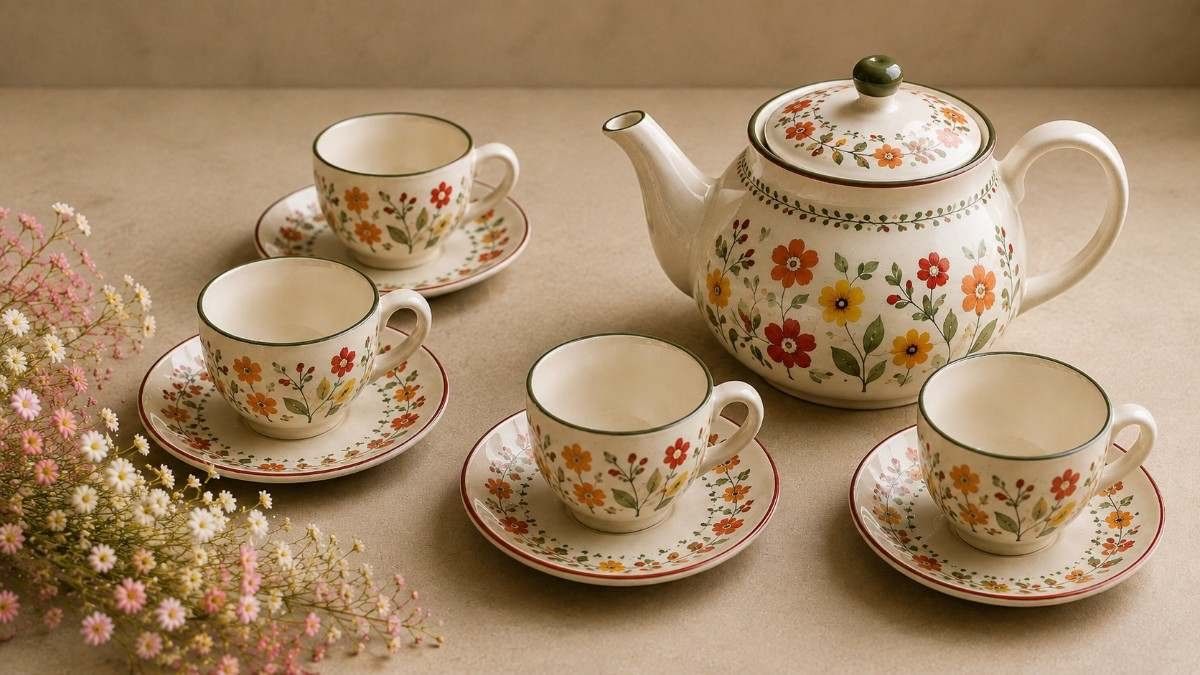
Where glaze quality shows up
The inside matters more than the outside. A properly glazed interior wipes clean; a rough one holds tannin and gets a permanent brown ring within months. Check the product photos for an interior shot. Sellers who never show the inside are usually hiding something.Choosing a Teapot and Cup Set That Suits Your Household
Count how many people actually drink tea together in your home, then buy a tea pot set for that number plus one.- 600–700 ml pot: two people, two cups each. Suits couples and small flats.
- 900 ml–1.2-liter pot: four people, or two people with refills. The most useful size for a family.
- 1.5 liter and above: six or more, or a household that hosts weekend gatherings often.
The spout test
Ask one question: does it drip. A bad spout dribbles down the side and leaves rings on your table. The tells are a spout sitting lower than the lid line, a very short spout, or a fat rounded tip instead of a sharp cut edge.Styling: Simple Ways to Make Tea Time Feel Special
None of this requires a dining room or a free afternoon.- Put everything on a tray. A tray turns scattered objects into a set, even if half the pieces don’t match.
- Warm the pot first. Swirl hot water, tip it out, then brew. It’s ten seconds and it changes the last cup.
- Add one small plate of something: two biscuits, a slice of cake, roasted chana. Food gives people a reason to stay.
- Keep one cloth napkin under the pot. It absorbs drips and stops the base clicking against a glass table.
- Serve strained tea from the pot rather than making it in the pot, if you make masala chai on the stove. The pot becomes the server, not the brewer.
An Elegant Teapot Without an Expensive One
Price and elegance are only loosely related. A plain matte white pot with a clean spout line looks more considered than a heavily decorated one with gold scrollwork, and it goes with everything you already own. What actually reads as elegant: a lid that sits flush rather than rattling, a handle that’s proportionate to the body, and a consistent glaze with no pooling at the base. An elegant teapot usually has one design idea, not four. If you’re mixing pieces, keep the pot plain and let the cups carry any pattern, or the reverse. Not both. Pricing for a tea pot set runs from modest for simple stoneware to considerably higher for fine bone China, depending on decoration and whether cups are included. Treat any listed range as indicative rather than a quote.Tea Party Tableware: Building the Wider Table
Once the pot is sorted, the rest of the tea party tableware is a short list. A two-tier stand or a flat platter for snacks. Small side plates, ideally 15 to 18 cm. A milk jug and a lidded sugar pot if your set didn’t include them. Teaspoons that match in finish, not necessarily in pattern. Keep the palette to two colours. A cream pot with sage cups and a wooden tray is a coherent tea serving set. Add a fourth colour and it looks like a cupboard emptied onto a surface. For festivals and larger gatherings, a bigger tea pot set with six matching cups covers most situations. You rarely need the full formal arrangement Instagram suggests.Care and Cleaning: Making a Tea Pot Set Last
Tannin is the enemy, not breakage.- Rinse the pot immediately after use. Tea left overnight stains the interior permanently.
- For existing stains, soak with warm water and bicarbonate soda, then wipe. No steel wool.
- Never pour boiling water into a cold pot. Warm it with lukewarm water first.
- Store the lid inverted on a cloth. Lids chip more often than pots.
- Check the base marking before microwaving. Gold-rimmed and hand-painted pieces rarely qualify.
Frequently Asked Questions
Can I make masala chai directly in a tea pot set?
Usually not. Most ceramic and porcelain pots aren’t stovetop safe and crack over direct flame. Brew chai in a pan as normal, then strain it into a warmed pot for serving. Cast iron is the exception, though even those are meant for keeping tea hot rather than boiling milk.What size teapot should I buy for a family of four?
A 900 ml to 1.2-liter pot works well. It fills four standard cups with a little left for a top-up, and stays light enough to pour comfortably when full. If you often have guests, 1.5 liters makes sense, but check the handle is large enough to grip properly.Is a porcelain teapot set better than stoneware?
Neither is better outright. Porcelain is lighter, finer and easier to pour one-handed, which suits everyday chai and formal serving alike. Stoneware holds heat longer and forgives rough handling, which suits busy households. Choose porcelain for looks and lightness, stoneware for durability and longer heat retention.How do I remove brown tea stains from inside the pot?
Make a paste of bicarbonate soda and warm water, coat the interior, and leave it for an hour before wiping with a soft cloth. Repeat for stubborn rings. Avoid bleach, which can linger in porous glazes, and never use steel wool, which scratches the interior and makes future staining worse.Conclusion
Tea time turns into an occasion through fairly small decisions: a pot instead of individual cups, a tray instead of a bare counter, ten seconds of warming, and something to eat alongside. A tea pot set from Shokki Decor does the heavy lifting because it changes how people behave around the table, and it keeps the second cup within reach. Choose the size around how many people actually drink together, check the spout, keep the design simple, and rinse it out the same evening. If you’re deciding between materials or sizes, browsing a well-curated tableware range is the quickest way to narrow it down. Explore Shokki Decor’s tea pot sets to find the right style and size for your tea table.Keep reading
Related stories

7 min read
Tea Set for Six Online: How to Choose One That’s Perfect for Hosting Guests
You’ve invited three couples over. The samosas are sorted, the house looks fine, and then you open the crockery cabinet and find four cups that match, two that don’t, and a pot with a chipped lid from Shokki Decor. Every

7 min read
Tea Pot and Cup Set Online: A Simple Way to Upgrade Your Tea Time
Most of us make good chai and then ruin the moment. The tea gets strained straight from a steel pan into whatever mug is closest, everyone stands around the kitchen counter, and it’s over in four minutes. Nothing wrong w

7 min read
Complete Tea Set Online: What Should a Good Set Include?
Two listings, same price. One says “15-piece tea set”, the other says “9-piece”. The 15-piece one sounds better until you notice it counts six saucers, six cups, a pot, a lid and a tray as separate items, while the 9-pie