
How to Build a Tea Serving Collection at Home
Build a tea serving collection for Indian hosting. Learn which pieces to buy first, which materials last, and how to style chai time with Shokki Decor.
By shokkidecor7 min read

The kettle is on, four guests have turned up half an hour earlier than promised, and you’re staring into a cupboard that holds two matching cups, one chipped saucer and a mug someone brought back from a conference. Most of us have stood there. A good tea serving collection isn’t about owning more crockery. It’s about owning the right pieces, in the right numbers, so pouring chai for six stops feeling like an improvisation. Shokki Decor offers thoughtfully selected pieces that can help bring both practicality and style to your tea-serving setup.
This guide covers what to buy first, which materials survive Indian kitchens and daily scrubbing, and how to make a modest number of pieces look genuinely considered. With Shokki Decor, you can explore tea-serving essentials that make everyday hosting feel more polished without overcomplicating your collection.
Start With How You Actually Drink Tea
Before you buy anything, watch your own week. Do you drink cutting chai twice a day at the kitchen counter, or do you brew a pot of Darjeeling on Sunday mornings? Does tea in your house arrive with biscuits, or with poha, samosas and three kinds of chutney?
The answer changes the shape of the tea serving collection you actually need. A household that runs on strong milk chai wants sturdy, thick-walled cups in the 120 to 180 ml range, because chai in a large cup goes cold and sad halfway through. A household that brews leaf tea and lets people linger wants wider cups with saucers, a pot holding at least 700 ml, and somewhere to rest the strainer. Buying an English-style set when nobody in your home drinks tea that way is the most common and most expensive mistake.
The Core Pieces Every Tea Serving Collection Needs
You can host well with fewer things than most shopping lists suggest. Think in layers rather than buying a boxed set and hoping it covers everything.
Cups and saucers
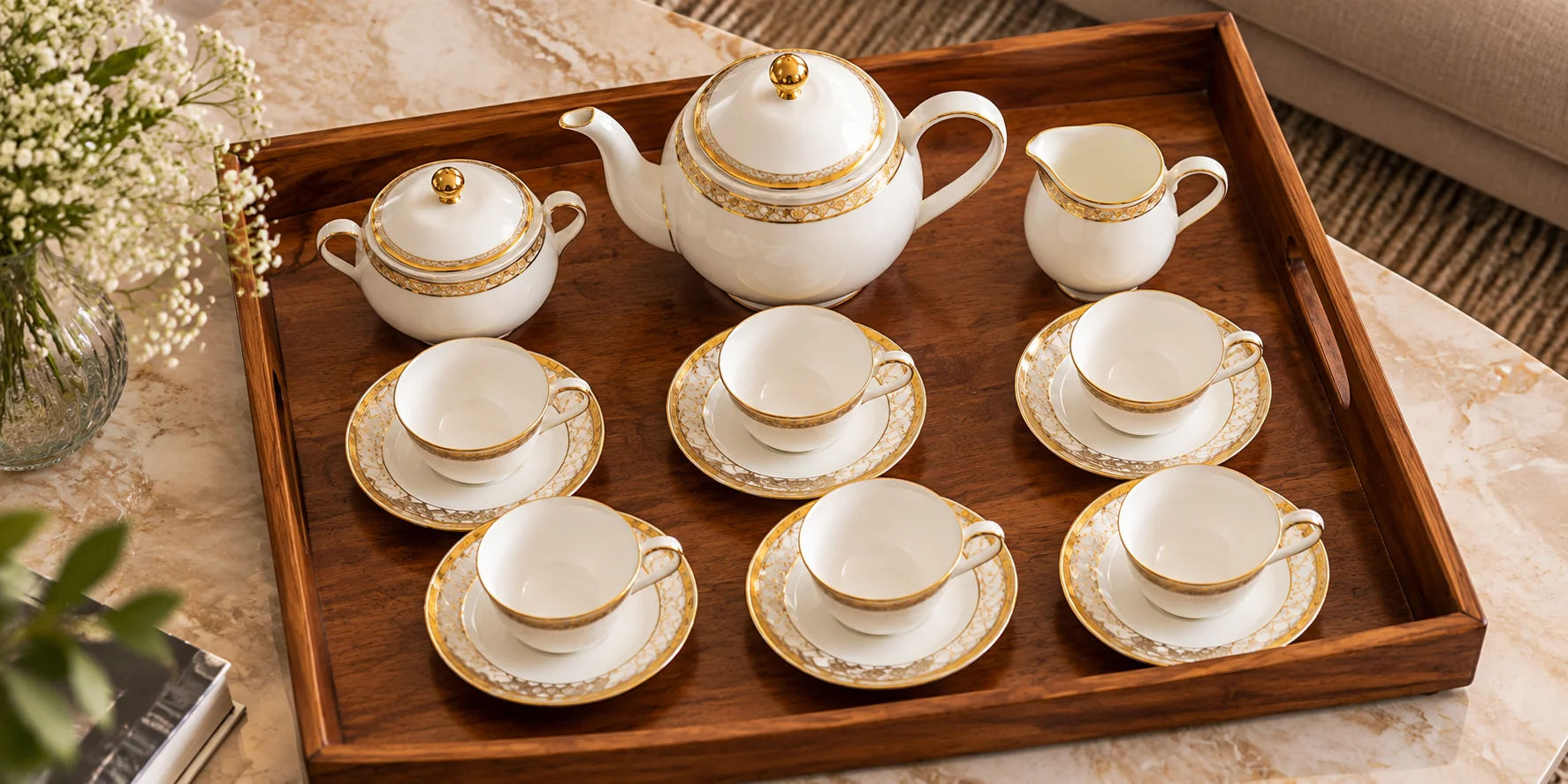
Six is the number that works in Indian homes. Four leaves you short the moment neighbours drop in; eight means storing pieces you use twice a year. If your guests usually take chai, choose a smaller cup with a solid base and a handle you can hold with your whole hand, not two fingers.
The pot, and whether you need one
A teapot earns its place only if you brew loose leaf or serve more than three people at once. Otherwise a good insulated jug does the job. If you do buy one, check that the spout pours without dribbling and that the lid stays put when you tip it fully. Both faults are common and both are maddening.
Trays and small serving pieces
This is where a tea serving collection starts feeling deliberate. A tray with a raised lip, a small milk jug, a sugar pot with a lid, and two little dishes for nuts or namkeen will do more for your table than another set of cups. These tea serving accessories are also the pieces guests notice, because they sit in the middle of the table.
Choosing Materials: Porcelain, Bone China or Stoneware
Material decides how your tea serving collection feels in the hand, how it survives your kitchen, and how often you’ll be replacing pieces.
Material
Look and feel
Everyday durability
Microwave / dishwasher
Suits
Porcelain
Bright white, fine rim
Good, chips if stacked carelessly
Usually both, if unbanded
Daily and guest use
Bone China
Thin, warm-toned, translucent
Tough for its weight, pricier to replace
Hand wash metallic trims
Occasions and gifting
Stoneware
Matte glaze, heavier
Excellent, hides wear well
Generally both
Everyday chai, homes with children
Glass
Clear, shows the brew
Fragile unless borosilicate
Check the specification
Flavoured and herbal teas
One honest recommendation: stoneware for the cups you use daily, porcelain or bone china for what you bring out for guests. Mixing the two looks better than people expect, provided your tea serving ware keeps a tight palette.
Building a Tea Table Setting That Works in Indian Homes
A tea table setting here rarely stays neat for long, and it shouldn’t have to. Snacks arrive in stages, someone wants extra sugar, a child reaches across for a biscuit. Design for that.
Keep the centre clear enough for one shared tray. Put the pot and milk jug on that tray rather than loose on the table, so the whole arrangement can be lifted when the samosas land. The rest of your tea serving collection can wait on a side table. Keep the sugar pot lidded too, because in humid months an open bowl turns into a solid block by evening.
Colour is the easiest way to make mismatched pieces read as a set. One dominant tone, one neutral, one accent. Three colours, not five.
How to Grow Your Tea Serving Collection in Stages
Nobody needs to buy everything at once. A sensible sequence spreads the cost and stops you accumulating pieces you never reach for.
1. Stage one: six cups with saucers and one medium tray. This alone handles most visits.
2. Stage two: a milk jug, a lidded sugar pot and two small snack dishes.
3. Stage three: a teapot, a strainer and a rest for it.
4. Stage four: the decorative layer, including cake stands, cloth napkins and other elegant tea accessories that appear for festivals.
5. Stage five: a second, finer set reserved for occasions, if you host often enough to justify it.
Spread over a year, this is far kinder to your budget than one large purchase, and you learn what you genuinely use.
Tea Party Tableware for Festivals and Larger Gatherings
Diwali, a housewarming, a Sunday with both sets of in-laws: these are the days a normal set stops being enough, and the point at which most people find the gaps in their tea serving collection. Good tea party tableware for larger groups means quantity in the working pieces and restraint in the decorative ones.
Plan to serve in rounds rather than all at once. Two trays beat one enormous one. Keep small plates that double as snack plates and saucer replacements. Above ten guests, mixing cup styles by colour family rather than exact match looks intentional and saves buying a second full set.
Care, Washing and Storage
The fastest way to shorten the life of a tea serving collection is a crowded sink and a hurried stacking routine. Small habits protect good tea serving ware far more than expensive detergent does.
Everyday washing
Rinse tannin stains straight away with warm water. If a cup has browned inside, a paste of baking soda left for ten minutes lifts it without abrasion. Skip steel scrubbers entirely on glazed surfaces. Anything with gold or platinum banding stays out of the dishwasher, because the trim dulls and flakes.
Storing without chipping
Stack no more than four cups high. Put a paper napkin or felt pad between stacked saucers. Store handles facing the same direction so nothing catches when you lift a piece out. In monsoon conditions, air the cupboard occasionally so trapped moisture doesn’t leave a musty smell in unglazed stoneware bases.
Frequently Asked Questions
How many cups should a tea serving collection have?
Six is the practical number for most Indian households. It covers a family of four plus two unexpected visitors without leaving you washing up mid-conversation. Go to eight only if you host larger groups often, and prefer a second stackable set over one oversized matching set.
Is bone china worth the extra cost?
It is if you host often and enjoy the ritual. Bone china is lighter, warmer in tone and holds heat slightly longer than thin porcelain. For daily chai with children around, stoneware makes more sense. Plenty of people keep both and choose based on who is visiting.
Can I mix different designs in the same set?
Yes, and it often looks better than a boxed set. Keep one colour consistent, or one shape family, so the mix reads as a choice rather than an accident. Matching trays and saucers pull mismatched cups together, and a tea serving collection built that way feels more personal.
What are the best tea serving accessories to buy first?
A tray with a raised edge, a lidded sugar pot and a small milk jug. Those three change how the table works more than any extra cup will. Add a strainer and a rest for it later, but only if you brew loose leaf often enough to miss them.
Conclusion
A tea serving collection earns its place by making an ordinary evening feel better without adding work. Start with how your household actually drinks tea, buy six good cups before anything decorative, choose stoneware where it takes daily punishment and finer material where it gets admired, then add elegant tea accessories gradually. Keep the palette tight, store things properly, and accept that the set will pick up marks. That isn’t damage. That's the use. Shokki Decor can help you find tableware pieces that suit both everyday tea moments and thoughtful hosting.
If you’re putting a set together and aren’t sure which materials suit your home and washing routine, talking to an experienced tableware specialist is the quickest way to get advice matched to how you actually host. Shokki Decor will help you choose the right tea-serving pieces, explore the collection today and find pieces that suit your home.
Keep reading
Related stories

8 min read
How to Select the Perfect Dinnerware Sets for Your Home
Creating a beautiful dining space starts with choosing tableware that complements your home's style and everyday needs.

7 min read
Ceramic Table Accessories That Can Give Your Dining Setup a Fresh Look
Refresh your dining table with ceramic table accessories from Shokki Decor. Explore thoughtful accents for everyday meals and gatherings.

6 min read
Tabletop Accessories Online Bangalore: Small Details That Can Transform Your Table
Want to refresh your dining table? Discover tabletop accessories online in Bangalore at Shokki Decor.