
Ceramic Tea Cup Collection Online: Buying Guide
Shopping for a ceramic tea cup collection online? Explore sizes, glazes, weight and care with Shokki Decor for a set that suits your daily chai beautifully.
By Ravi Maddur7 min read

Your kettle whistles at 6:40 every morning, and you reach for the same chipped cup you’ve been meaning to replace for two years. Most of us do. Tea is the one ritual that repeats daily, yet the vessel it goes into is usually an afterthought, picked up during a wedding return-gift exchange or a supermarket run. Shokki Decor offers thoughtfully selected tableware for making everyday tea rituals feel a little more special.
Browsing a ceramic tea cup collection online is how most people finally fix that, because you can compare shapes, capacities and glazes side by side instead of squinting at a shelf. The catch is that photographs flatten everything. A cup that looks generous in a studio shot can hold barely 120 ml in your hand. Knowing what to check before you order saves you a return, while Shokki Decor gives you options to explore when choosing a ceramic tea cup for everyday use.
Why Ceramic Still Suits Indian Tea Better Than Most Materials
Masala chai is served hot, sweet and strong, usually in smaller pours than Western tea. Ceramic handles that well. It holds heat for the eight or ten minutes a conversation takes, but doesn’t scald your fingers the way thin glass does on a Bangalore balcony in December.
There’s a taste argument too. Well-fired, properly glazed ceramic tea cups are chemically inert. They don’t pick up the ghost of yesterday’s coffee or the metallic edge some stainless tumblers give a delicate first-flush Darjeeling.
The trade-off is honest: ceramic chips. Drop it on a granite counter and you’ll know. Replacement is cheap enough that you can treat cups as consumables rather than heirlooms, which is one reason a ceramic tea cup collection online is easier to live with than an expensive imported set.
What to Check Before You Buy a Ceramic Tea Cup Collection Online
Product photos are styled to flatter. These four details tell you far more than the hero image does.
Weight and Wall Thickness
Read the numbers, not the picture. Around 180–220 grams for a 200 ml capacity is a comfortable everyday weight. Much lighter and it cools your chai fast; much heavier and guests with smaller hands find it tiring. Thicker walls hold heat longer. Thin walls feel more refined and suit lighter teas.
Glaze, Finish and Interior Colour
A glossy interior glaze is easier to clean and shows tea staining less than a matte one. Reactive glazes photograph beautifully but vary from piece to piece by design, so expect differences across a set. Ask yourself whether you want six cups that match perfectly or six that look related. Both are valid, and the second is what gives handmade style tea cups their charm.
Handle Shape and Base Stability
Look for a handle with a genuine finger gap, not a decorative loop. Check the base diameter against the rim too. Narrow-based, wide-rimmed cups tip easily on a moving tray.
Sizes: Match the Cup to How You Actually Drink
Indian tea portions are smaller than European ones, and buying a 350 ml mug for chai leaves you with lukewarm tea halfway down. This is the single most common sizing mistake.
Capacity
Best for
Typical use
90–120 ml
Cutting chai, kahwa
Evening guests, quick rounds
150–200 ml
Everyday masala chai
Daily morning cup
200–250 ml
Green tea, herbal infusions
Slow afternoon drinking
250–350 ml
Milk coffee, latte-style drinks
Weekend breakfasts
A practical compromise is a set of 150–180 ml cups for tea plus two larger mugs for whoever drinks coffee. Most listings in a ceramic tea cup collection online state volume clearly, so use that number rather than the photograph.
Ceramic Tea Ware Compared With Bone China and Glass
Each material earns its place on a different kind of table.
• Stoneware and ceramic tea ware: sturdy, good heat retention, usually microwave and dishwasher friendly. Best for daily use and casual hosting.
• Bone china and porcelain: thinner, lighter, translucent at the rim. Lovely for festivals and gifting, but easier to chip.
• Borosilicate glass: shows off green and blooming teas, cools fast, awkward to hold with hot chai.
• Stainless steel: unbreakable, but conducts heat straight to your fingers.
If you host often and wash daily, a ceramic cup collection is the low-anxiety choice. Keep fine china for the two or three occasions a year when the table is meant to feel special.
Styling Stylish Ceramic Cups on an Indian Table
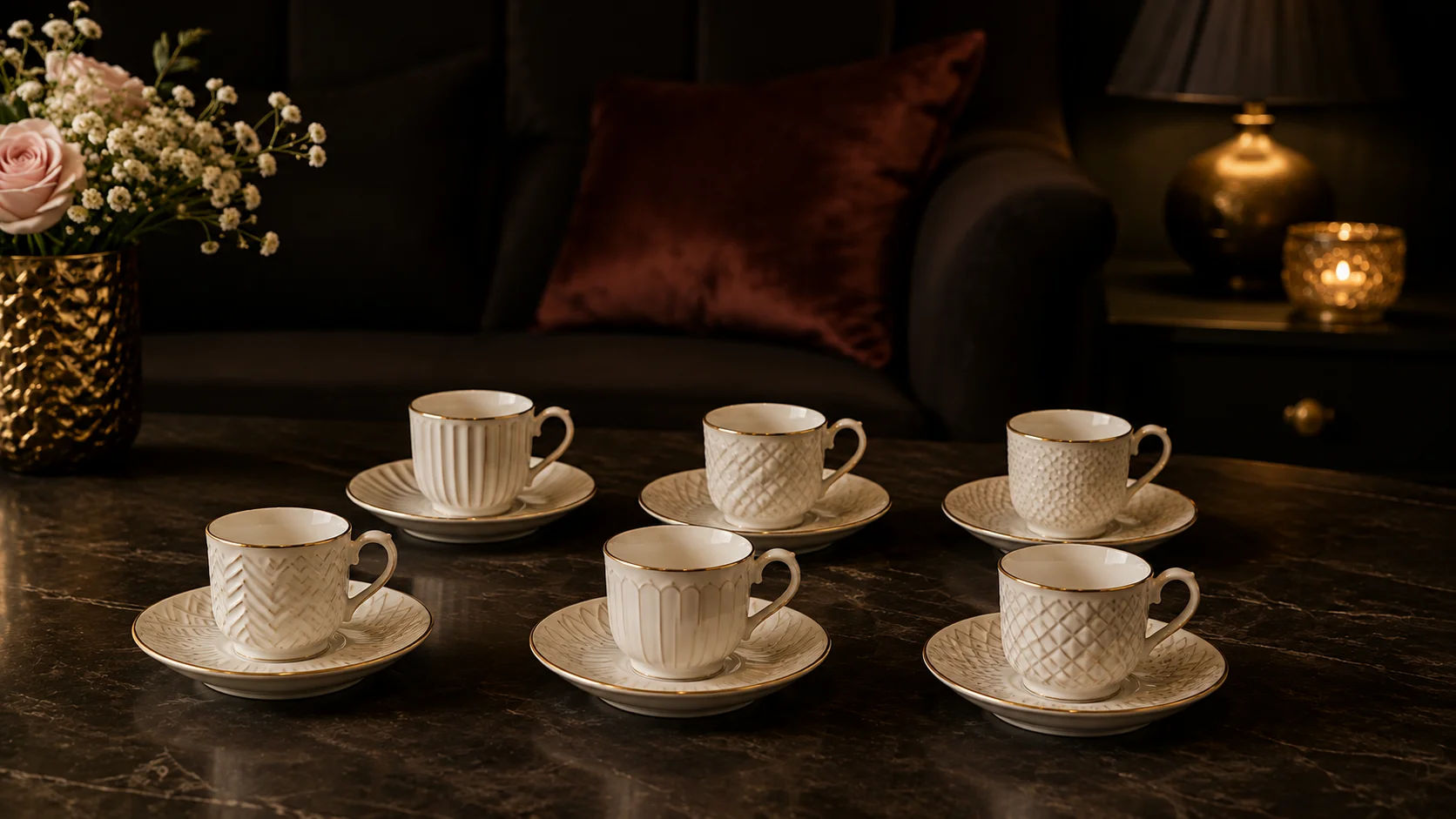
Mixing beats matching, within limits. A trick that works reliably: keep the shape consistent and let the colours vary. Six identical silhouettes in four glaze tones read as intentional. Six different shapes in one colour read as leftovers.
Ground the arrangement with something neutral underneath, a linen runner or a plain wooden tray, so the stylish ceramic cups stay the focal point. For festival tables where sweets crowd the surface, choose glazes that pick up one colour already present, perhaps the terracotta of a diya. And leave breathing room. Crowded tables make even lovely cups look cluttered.
This is where a ceramic tea cup collection online beats shop browsing. You see the full range photographed together and can judge whether the tones sit well side by side, which shop lighting rarely allows.
Care, Washing and Everyday Practicalities
Most glazed ceramics are dishwasher safe, but the honest advice is that the top rack, a lower-temperature cycle and no overcrowding will extend their life considerably. Cups knocking together during a wash cycle cause more chips than dropping ever does.
For tannin stains, a paste of baking soda and water, left ten minutes then rubbed with a soft cloth, clears the brown ring without scratching the glaze. Skip steel scrubbers. They dull glossy finishes permanently.
Two more things. Any cup with metallic gold or platinum detailing is not microwave safe, no exceptions. And in humid weather, store cups upright rather than stacked rim-down, so trapped moisture doesn’t sit against the glaze.
Building Your Ceramic Tea Cup Collection Online Without Regret
Order in a sensible sequence rather than buying everything at once.
1. Start with a set of four in the size you actually drink, not the size you aspire to.
2. Live with them for a month. Note what annoys you: the handle, the weight, the staining.
3. Add two contrasting cups for guests, in the same shape family.
4. Only then consider a matching teapot, saucers or a serving tray.
5. Keep spares from the same range, because ranges get discontinued.
Growing a ceramic cup collection this way costs no more overall, and you end up with pieces you reach for rather than pieces you store.
Check the returns window and read reviews that mention capacity, because listings and reality diverge there more than anywhere else. A good ceramic tea cup collection online lists volume in millilitres, dimensions, and dishwasher and microwave suitability. If those details are missing, treat it as a warning.
Frequently Asked Questions
How many cups should I buy for a family of four?
Six is the practical minimum. Four for daily use and two spares covers the inevitable chip plus the neighbour who drops in. If you host regularly, eight gives you room for a second round without washing mid-gathering, and it lets you retire damaged pieces without breaking up the set.
Are ceramic tea cups safe for the microwave?
Most plain glazed ceramic tea cups are microwave safe, provided there is no metallic rim or hand-painted gold detail. Manufacturers usually state this on the listing. If a cup gets noticeably hotter than the liquid inside after thirty seconds, stop using it for reheating and keep it for serving only.
Does buying a ceramic tea cup collection online risk breakage in transit?
It’s the main concern, and reputable sellers pack tableware in individual foam sleeves inside a double-walled carton. Photograph the parcel before opening it. Most brands resolve transit damage quickly when you report it within the stated window, usually a day or two after delivery.
Will handmade style tea cups vary from the photos?
Yes, and that’s the point. Reactive glazes and hand-finished rims produce genuine variation in tone and speckling, so no two pieces are identical. If you need perfect uniformity for a formal table, choose a machine-glazed glossy range instead and keep the artisanal pieces for casual use.
Conclusion
The cup you use every day deserves more thought than the one you bring out twice a year. Get the capacity right for how you actually drink chai, favour a glossy interior if staining bothers you, check handle comfort, and accept that a well-used cup will eventually chip. Shopping for a ceramic tea cup collection online makes that comparison far easier than any shop shelf, as long as you read the specifications rather than trusting the styling. Start small, live with your choice, then expand with Shokki Decor.
If you’re unsure which size or glaze suits your household, speaking with an experienced tableware team like Shokki Decor is the quickest way to get advice matched to how you actually entertain.
Keep reading
Related stories

7 min read
Coffee Cup and Saucer Set: How to Choose Well
A practical guide to picking a coffee cup and saucer set from Shokki Decor: sizes for filter coffee and espresso, materials, lasting designs and easy care.

7 min read
How to Choose an Elegant Tea Cup and Saucer
Choosing an elegant tea cup and saucer from Shokki Decor? Learn how proportion, rim shape, material and size can make your table look right for any occasion.

7 min read
Fine China Tea Cups: How to Choose a Set
Choosing fine china tea cups from Shokki Decor? Compare capacity, shape, patterns and care so you buy a set you’ll actually use, not one kept behind glass.