
Fine China Tea Cups: How to Choose a Set
Choosing fine china tea cups from Shokki Decor? Compare capacity, shape, patterns and care so you buy a set you’ll actually use, not one kept behind glass.
By Ravi Maddur7 min read

Most people buy their first proper tea set for the wrong reason. A wedding gift arrives, or a sale catches the eye, and six pieces enter the house without anyone asking whether they suit the tea actually drunk there. Two years later the set is intact, unused, and slightly resented for taking up a shelf. Shokki Decor offers thoughtfully selected fine china options that make it easier to choose pieces suited to your everyday tea ritual.
Choosing fine china tea cups well is mostly about matching the object to the habit. If your household runs on strong milk chai at 7 am and again at 5 pm, that points to one kind of cup. If you brew loose-leaf oolong on Sunday afternoons, it points to another. Get that right and everything else, pattern included, becomes a much easier decision, with Shokki Decor offering elegant choices to complement different tea habits.
What Makes Fine China Tea Cups Different
Fine china is a broad label covering bone china and hard-paste porcelain, both fired at high temperatures until the body vitrifies and becomes non-porous. That’s the technical difference from earthenware, which stays slightly absorbent and eventually stains through crazing in the glaze.
Three things follow. The wall can be made much thinner without becoming fragile, so fine china tea cups sit light in the hand. The white is cleaner and often slightly translucent, which flatters the colour of tea. And because the body is sealed, it won’t hold the smell of yesterday’s coffee.
The compromise is heat retention. A thin cup loses warmth faster than a thick stoneware mug. For chai served scalding that’s usually a benefit, but if you nurse one cup for half an hour, you’ll notice it going cold.
Start With How You Drink, Not How It Looks
Three specifications matter more than the pattern on the outside.
Capacity
Indian tea portions run smaller than Western ones. A 150 to 180 ml cup fits masala chai comfortably. Green and herbal infusions suit 200 to 240 ml, since they’re sipped over longer. Anything above 280 ml is really a coffee vessel. Buying elegant tea cups that are too large is the mistake people regret most.
Shape and Rim
A flared rim cools tea faster and suits lighter, aromatic teas. A straighter, taller profile holds heat and suits milk-based chai. Rim thickness changes the experience more than any decoration does; a fine, slightly outward-turned rim feels better against the lip.
Handle
Hold it before you commit, or read reviews carefully online. A handle needs a real gap for two fingers, set high enough that your knuckles don’t touch hot ceramic. Small decorative loops photograph well and annoy daily.
Reading the Labels: Bone China, Porcelain and New Bone China
Descriptions get used loosely, so it helps to know what each term generally implies.
Term
What it usually means
Feel
Best for
Bone china
Contains bone ash, highly translucent
Lightest, warm white
Guests, gifting, tea
Porcelain
Hard-paste, fully vitrified
Light, cool white
Everyday plus formal
New bone china
Bone-china look without bone ash
Slightly heavier
Budget-conscious buying
Stoneware
Opaque, thicker walled
Heavy, rustic
Casual daily use
None of these is objectively best. Bone china gives the finest feel, porcelain balances durability and refinement, and new bone china delivers most of the look for less money. Any of the three can produce excellent fine china tea cups; the difference is where you want your budget to go.
Choosing a China Tea Set That Suits Your Table
Sets come in fours, sixes and twelves. Six is the practical default for an Indian household: enough for a normal gathering, with two survivors when something breaks. Twelve only makes sense if you host large family lunches regularly and have the storage.
Decide whether you want cups alone or a full china tea set with teapot, sugar pot and creamer. The full set looks wonderful and gets used perhaps four times a year. Cups get used weekly. If budget is tight, put the money into the cups and buy a plain teapot in a hardier material.
Buy fine china cups and saucers as a matched pair from one range rather than mixing. Saucer well diameters differ between makers, and a cup that rocks slightly in its saucer is a small irritation that never stops being noticeable.
Colour, Pattern and Fine China Tableware That Works Together
Restraint wins over time. An ivory or white body with a single band, a subtle embossed texture, or a small repeated motif will still look right in a decade and works alongside almost any dinner plate you already own.
If you want colour, take one of two directions. Either pick a single accent that appears elsewhere on the table, in the runner or the serving bowls, or choose a statement set and keep everything around it plain. Two competing patterns is what makes a table look busy.
For festival hosting, gold or platinum detailing looks genuinely special under warm light. Remember the trade-off: metallic trim rules out the microwave permanently and usually means hand-washing. Plenty of good fine china tableware gets a rich look from embossing and glaze depth instead, which keeps the set dishwasher friendly. Elegant tea cups don’t have to be high-maintenance ones.
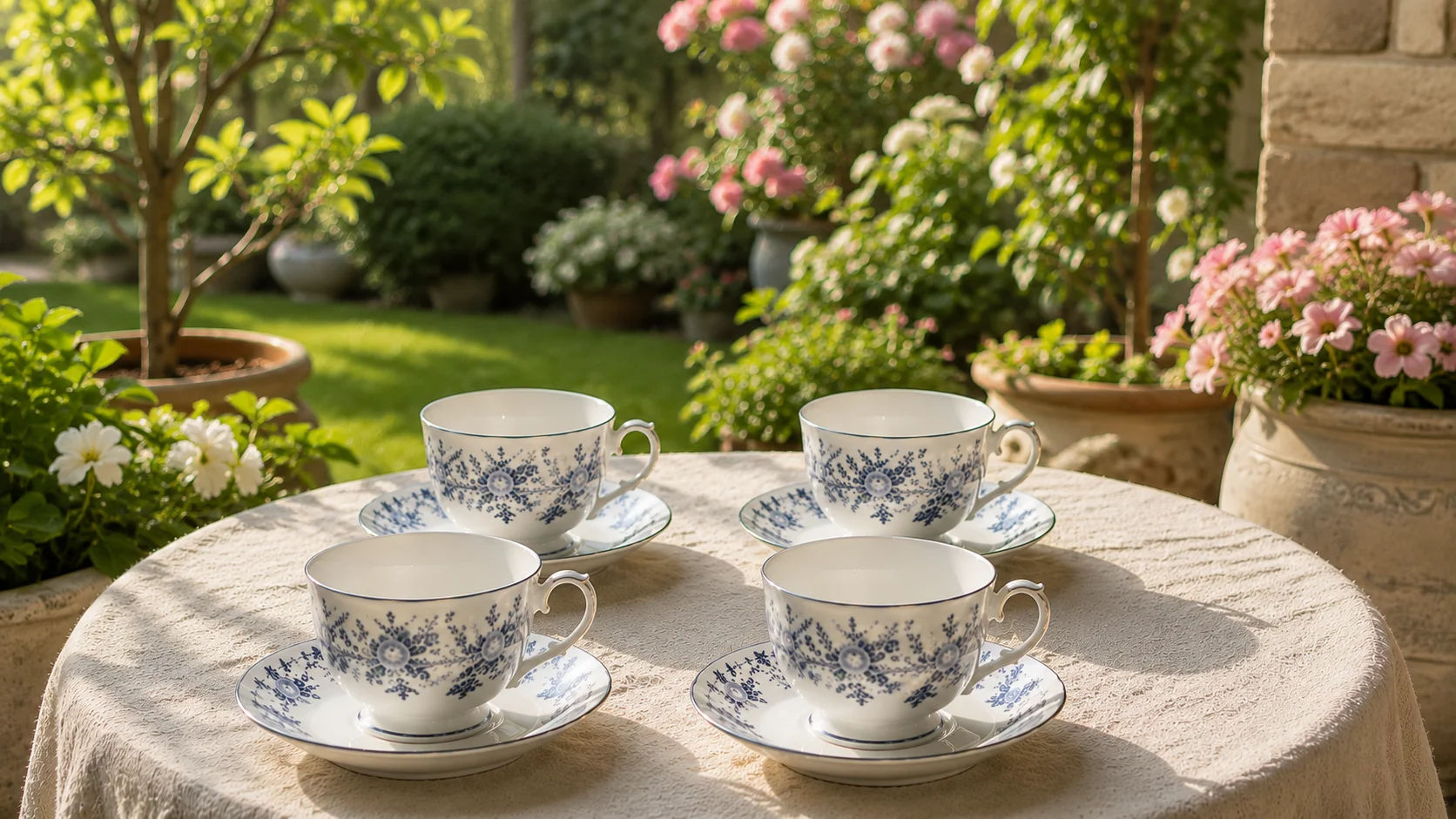
Where Fine China Tea Cups Earn Their Keep
The obvious answer is festivals and guests. The better answer is ordinary days. Used regularly, a set stops feeling precious, which is exactly when it becomes enjoyable.
Situations where the difference shows clearly:
• Serving chai to visiting relatives, where a saucer gives everyone somewhere to rest a biscuit.
• Afternoon tea with lighter leaf teas, where a pale interior shows the liquor colour properly.
• Terrace gatherings, where lightweight cups are easier to carry on a tray.
• Gifting, since boxed premium tea ware suits weddings and housewarmings without being presumptuous.
Care, Washing and Making the Set Last
Dishwasher Rules
Undecorated and under-glaze pieces generally handle a gentle cycle. On-glaze patterns fade slowly. Anything metallic should never go in. Whatever the label says, load with space between pieces, because contact causes more chips than heat ever will.
Storage
Store cups upright, never nested. Place a napkin between stacked saucers. Keep the set within reach rather than on a top shelf; premium tea ware that needs a stool to retrieve gets used twice a year.
For tea staining, a soft cloth with baking soda paste lifts the brown ring without scratching. Avoid steel wool and bleach.
Budget: What Actually Changes as Price Rises
Treat any figure as indicative, since pattern and origin move prices a great deal. At entry level you get clean shapes, decent white bodies and simple decal patterns. In the middle band you notice thinner walls, better rim finishing and genuine translucency. At the top you’re paying for hand-applied detailing and consistency across a large set.
For most homes, mid-range fine china tea cups used often beat an expensive set used rarely. Judge value by weight in the hand, rim smoothness and the clarity of the ring when you tap the side.
Frequently Asked Questions
How many fine china tea cups should I buy?
Six is right for most homes. It covers a typical gathering and leaves spares when a piece breaks or chips. Buy four only if you live alone or as a couple and rarely host. Twelve is worth it only with the storage space and a habit of large family lunches.
Are fine china cups and saucers safe in the microwave?
Plain, undecorated pieces usually are, but anything with gold or platinum trim is not and will spark. Hand-painted on-glaze decoration is also risky. If you reheat tea often, keep a plain stoneware mug for that job and use the china for serving.
What size cup suits masala chai best?
Between 150 and 180 ml. Indian tea is served in smaller, stronger pours, so a big cup leaves you with cold tea at the bottom. If some of the household drinks coffee, add two larger pieces around 220 ml rather than sizing the whole set upwards.
Do fine china tea cups chip easily?
Less than their appearance suggests. High-fired china resists rim chipping reasonably well; damage usually comes from cups knocking together in a sink or dishwasher rack. Wash them apart from heavy pans, don’t nest them in the cupboard, and a good set survives years of daily use.
Conclusion
The set worth buying is the one that matches your actual tea habit. Start with capacity, check the rim and handle, then decide between bone china and porcelain based on whether you value lightness or durability more. Keep patterns restrained unless you’re committing to a statement table, and accept that metallic trim buys beauty at the cost of convenience. Bought thoughtfully, fine china tea cups stop being cupboard ornaments and become part of the day, which is the only real measure of whether tableware was worth the money. Shokki Decor offers fine china tea cups that bring an elegant touch to everyday tea moments.
If you’re torn between materials, sizes or set counts, talking it through with an experienced tableware team will narrow it down quickly. Shokki Decor can help you explore refined tableware options suited to your style and tea routine.
Keep reading
Related stories

7 min read
Coffee Cup and Saucer Set: How to Choose Well
A practical guide to picking a coffee cup and saucer set from Shokki Decor: sizes for filter coffee and espresso, materials, lasting designs and easy care.

7 min read
How to Choose an Elegant Tea Cup and Saucer
Choosing an elegant tea cup and saucer from Shokki Decor? Learn how proportion, rim shape, material and size can make your table look right for any occasion.

7 min read
Bone China Cups and Saucers: Buying & Care Guide
A practical guide to bone china cups and saucers from Shokki Decor: judge quality, choose for chai, gifting and washing tips to keep the glaze looking new.