
Coffee Cup and Saucer Set: How to Choose Well
A practical guide to picking a coffee cup and saucer set from Shokki Decor: sizes for filter coffee and espresso, materials, lasting designs and easy care.
By Ravi Maddur7 min read

You spend money on beans. Maybe a grinder, maybe a decent moka pot or a filter drip. Then the coffee goes into whatever mug was nearest the sink, and half the care put into brewing quietly evaporates. Shokki Decor offers thoughtfully selected tableware that can make the coffee ritual feel more polished from the first pour to the last sip.
A good coffee cup and saucer set is the cheapest upgrade left in that chain. It won’t make weak coffee strong, but it changes temperature behaviour, aroma, and the small ritual around drinking, which is a large part of why people bother with good coffee at all. The trick is choosing by capacity and wall thickness first, because those two decide how the coffee actually behaves once it’s poured. Shokki Decor brings elegant coffee cup and saucer options suited to a more refined everyday coffee experience.
Why the Cup Changes How Coffee Tastes
Temperature is the main lever. A thin-walled cup lets heat escape fast, so a 60 ml espresso can drop below its best drinking range within a minute. A thicker wall, preheated with hot water, holds temperature far longer. That’s why cafés rinse cups before pulling a shot, and it’s a habit worth stealing.
Shape matters for aroma. A narrow opening concentrates the smell towards your nose, which suits espresso and strong South Indian filter coffee. A wider bowl releases aroma faster and cools quicker, better for milk-forward drinks you sip over fifteen minutes.
Interior colour is the third factor, and it’s underrated. A pale interior lets you see the crema and judge the strength of a pour. Dark interiors hide both. It’s a small thing, but it’s the sort of detail that separates a considered coffee cup and saucer set from a random mug.
Sizing: Filter Coffee, Espresso and Everything Between
Capacity mismatches cause more disappointment than any other buying error. A 300 ml cup used for a single shot leaves a puddle at the bottom.
Drink
Capacity
Notes
Espresso
60–90 ml
Thick walls, narrow opening, preheat first
South Indian filter coffee
100–150 ml
Strong, small pours, often served with a saucer
Cappuccino
150–200 ml
Wider bowl, room for foam
Latte or milk coffee
220–300 ml
Larger, taller, longer drinking window
Americano
200–250 ml
Straight-sided works well
For most Indian homes, a coffee cup and saucer set in the 150–200 ml band is the versatile middle ground. It handles filter coffee generously, works for cappuccino, and doesn’t leave a small pour looking lost.
What to Look for in a Coffee Cup and Saucer Set
Three details separate a set you’ll use daily from one that disappoints after a week.
Wall Thickness and Heat
Thicker walls near the base hold heat; a thinner rim feels better against the lip. Good cups do both, tapering as they rise. A uniformly thin cup needs preheating. A uniformly thick one gives a clumsy drinking edge.
The Saucer Well
Look at the recess. It should hold the cup’s foot ring snugly enough that nothing slides while you carry it, but not so tightly that it sticks. A saucer with no well is really a small plate, as you’ll discover the first time you cross a room with one.
Handle Comfort
Two fingers should fit without touching the body. Test it if you can, or check reviews online. Small looped handles look refined in photographs and force an awkward pinch grip with a full cup.
Materials and What Each One Suits
• Porcelain: the standard, for good reason. Non-porous, dishwasher friendly, formal without effort.
• Bone china: lighter and finer, lovely for after-dinner coffee, less heat retention.
• Stoneware: heaviest, keeps coffee hot longest, suits a relaxed morning table.
• Double-walled glass: dramatic with layered lattes, but fragile and usually hand-wash.
• Stainless steel: unbreakable, though it conducts heat to the fingers and mutes flavour.
If one material has to cover everything, porcelain wins. Stoneware suits coffee that sits while you read the paper, and bone china is right when coffee arrives after dinner in front of guests. Elegant coffee cups in any of these will work; the material decides how forgiving they are day to day.
Coffee Cup Designs That Age Well
Trends move faster in coffee tableware than in dinnerware, worth remembering before committing to something bold. Speckled glazes, matte black and heavy texture all look current, and all date at a predictable pace.
Two safe strategies. Choose a plain body in white, ivory or a muted neutral and let the shape carry the interest. Or pick one accent colour that already appears in your kitchen, so the cups read as deliberate.
Coffee cup designs with a fine coloured rim band, subtle embossing, or a two-tone glaze give personality without shouting. If you love a strong pattern, buy two rather than six, and keep them as the pair for days you want to feel different.
Matching Coffee Cups With the Rest of Your Table
You don’t need everything to come from one range. You do need a connecting thread, usually colour or finish.
A few combinations that work reliably:
1. White cups with any dinner set you already own, since white sits with everything.
2. Matte cups with wooden trays and linen, for a relaxed morning table.
3. Glossy cups with glass and metal accents, for a more formal coffee serving set after dinner.
4. Speckled or reactive glazes with plain stoneware plates, keeping the pattern to one element only.
For hosting, four to six matching coffee cups on a tray read far better than a mixed collection, however nice the individual pieces are. Keep the odd mugs for family mornings.
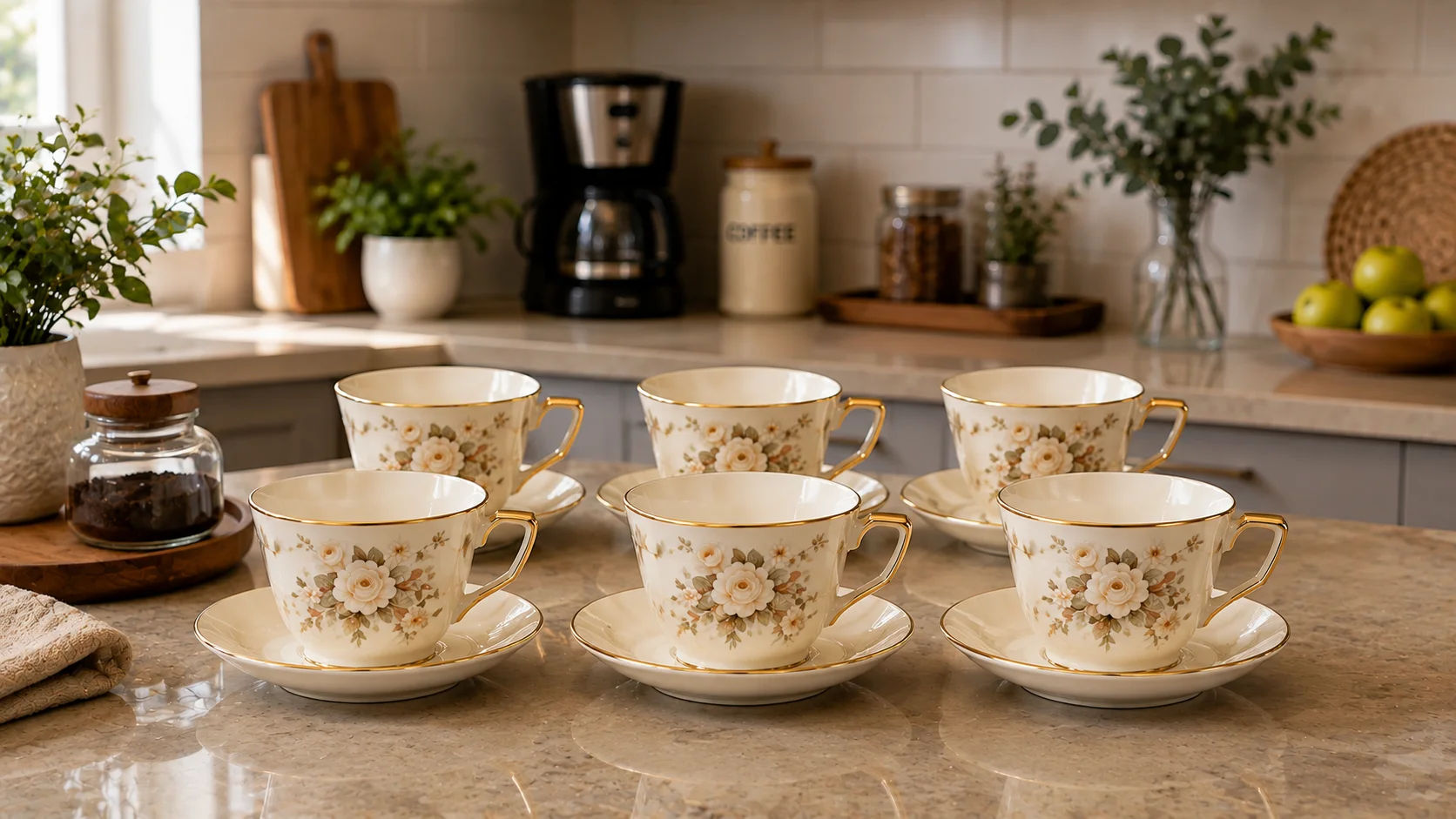
Buying a Coffee Cup and Saucer Set: Counts, Budget and Gifting
Six is the practical default. It covers guests, allows for breakage, and stores easily. Four suits a couple who rarely entertain. Twelve makes sense only with regular large gatherings and the cupboard space to match.
Pricing varies widely by material, origin and decoration, so treat figures as indicative and compare weight, rim finish and glaze evenness rather than headline price. A mid-range coffee cup and saucer set used daily beats an expensive one kept behind glass.
As a gift, coffee tableware works because it gets used. Choose neutral colours, buy six pieces so the recipient can host, and check the packaging protects each item individually. Skip metallic trim if the household microwaves everything.
Care, Staining and Storage
Coffee stains more aggressively than tea, especially on matte interiors. A weekly wipe with baking soda paste on a soft cloth keeps the inside clean without scratching. Avoid bleach and steel scrubbers, which dull the glaze permanently.
Dishwasher Notes
Most plain porcelain and under-glaze pieces handle a gentle cycle. Gold or platinum trim must be hand-washed, and never microwaved. Load with space between pieces; chips come from cups knocking together, not from heat.
Storage
Store elegant coffee cups upright rather than nested, and put a napkin between stacked saucers. Keep the set somewhere reachable. A shelf that needs a stool guarantees the cups get used twice a year.
Frequently Asked Questions
What size coffee cup and saucer set should I buy for filter coffee?
Between 100 and 150 ml suits South Indian filter coffee, served strong and small. If you also make cappuccino, 150 to 200 ml is the better all-round choice. Anything above 250 ml is a latte cup and leaves a filter pour looking thin.
Should I preheat my coffee cups?
Yes, especially thin-walled ones and anything under 100 ml. Rinse with hot water and tip it out just before pouring. It takes seconds and keeps espresso in its proper drinking range noticeably longer. Thicker stoneware benefits too, though it holds heat better to begin with.
Are saucers actually useful or just decorative?
Genuinely useful. A saucer catches drips, holds a spoon or a square of chocolate, and gives you a stable surface when carrying coffee to a sofa. It also makes serving guests look considered, which is most of why a proper coffee serving set feels different from mugs.
How do I remove coffee stains from the cup interior?
Make a paste of baking soda and a little water, leave it on the stained area for around ten minutes, then rub gently with a soft cloth. Repeat if needed. Skip abrasive powders and bleach, both of which dull a glossy glaze over time.
Conclusion
Get the capacity right for the coffee you actually drink, favour walls thick enough to hold temperature, check that the saucer well grips the cup properly, and make sure the handle fits two fingers comfortably. Those four things matter more than the pattern. Keep colours restrained if the set has to work every day, and save the bold pieces for a pair you bring out occasionally. Chosen this way, a coffee cup and saucer set stops being decoration and becomes part of the morning, which is where it earns its cost. Shokki Decor offers elegant coffee cup and saucer sets designed to complement everyday coffee moments.
If you’re weighing up materials, sizes or set counts, talking it through with an experienced tableware team is the quickest route to the right choice. Shokki Decor can help you explore tableware options suited to your coffee routine and style.
Keep reading
Related stories

7 min read
How to Choose an Elegant Tea Cup and Saucer
Choosing an elegant tea cup and saucer from Shokki Decor? Learn how proportion, rim shape, material and size can make your table look right for any occasion.

7 min read
Fine China Tea Cups: How to Choose a Set
Choosing fine china tea cups from Shokki Decor? Compare capacity, shape, patterns and care so you buy a set you’ll actually use, not one kept behind glass.

7 min read
Bone China Cups and Saucers: Buying & Care Guide
A practical guide to bone china cups and saucers from Shokki Decor: judge quality, choose for chai, gifting and washing tips to keep the glaze looking new.