
Porcelain Tea Cups and Saucers: Pick the Right Set
A plain-English guide to porcelain tea cups and saucers from Shokki Decor: how to judge quality, size, glaze and care for a set that lasts years and looks good.
By Ravi Maddur7 min read

Hold a cheap ceramic cup and a good one side by side and the difference registers before you’ve thought about it. One feels heavy and slightly chalky. The other is lighter than expected, smooth at the rim, and cool rather than rough under your thumb. That second feeling is what people are buying when they buy porcelain tea cups and saucers. Shokki Decor offers thoughtfully selected tableware for those looking for that refined everyday experience.
The trouble is that “porcelain” gets used loosely in product listings, sometimes for things that aren’t porcelain at all. Knowing what the word actually means, and what to check before you order, is most of the work. Shokki Decor makes it easier to explore quality tableware with style and everyday use in mind.
What Makes Porcelain Different
Porcelain is clay fired at very high temperature, typically well above 1200°C, until the body vitrifies. In plain terms it turns partly glassy, which is why it’s dense, non-porous and surprisingly strong for its thinness.
Why Vitrification Matters at Breakfast
A vitrified body doesn’t absorb liquid. Your cup won’t take on the smell of yesterday’s masala chai, and tea stains sit on the glaze rather than soaking into the clay, so they scrub off. Cheaper earthenware is porous under the glaze, which is why old mugs eventually smell faintly of everything they’ve held.
Porcelain, New Bone China and Bone China
These names get muddled constantly. Bone china includes bone ash in the body, making it lighter, whiter and more translucent, and it costs more. New bone china is a middle option that imitates the look without the same material. Ordinary porcelain sits below both in price and above most alternatives in durability, which is why it’s the practical everyday choice.
Why Porcelain Tea Cups and Saucers Suit Indian Homes
Indian tea habits are hard on crockery. Chai goes into the cup near boiling, cups get washed several times a day, and during festivals a set can serve twenty people in an afternoon.
Porcelain tea cups and saucers handle that. They take near-boiling liquid without complaint, resist the tannin staining strong milky tea causes, and survive daily washing far better than decorative earthenware. Undecorated pieces are usually dishwasher safe too.
There’s a humidity argument as well. Coastal and monsoon-heavy cities are unkind to porous ceramics kept in closed cabinets, where damp dulls a glaze over years. A vitrified body doesn’t care.
How to Judge Quality in Porcelain Tea Cups and Saucers
You can assess a lot without holding the piece, provided the listing has good photographs.
The Rim
Look for a clean, even line. Firing faults show here first, as dimpling, thin glaze patches or a slight wave along the edge. A rim that looks perfectly straight in a side-on photo is a good sign about the whole factory.
The Foot Ring
Turn the cup over in the photos. The unglazed ring on the base should be smooth and sanded flat. A rough one scratches your porcelain saucers, then your dining table. This is the detail budget manufacturers skip most often.
Translucency and Ring
Good porcelain lets a little light through at thin sections, and a lightly tapped cup rings clearly rather than thudding. A dull sound usually means a hairline crack or an under-fired body. This test only works after delivery, so do it on arrival while the return window is open.
Shape, Capacity and the Saucer Well
Capacity decides how the tea tastes by the last sip, so treat it as a specification rather than a detail when comparing porcelain tea cups and saucers.
• 90–150 ml: the Indian chai size. Tea stays hot to the bottom.
• 170–200 ml: better for green tea, herbal infusions and slow drinkers.
• Above 220 ml: effectively a mug with a saucer, and it rarely looks right on a laid table.
The saucer needs a proper well, meaning a shallow recess one or two millimetres deep for the cup foot to sit in. Flat porcelain saucers photograph beautifully and let the cup slide the moment you carry it. Diameter should run roughly one and a half times the cup’s outer width, which leaves room for a biscuit without dominating the table.
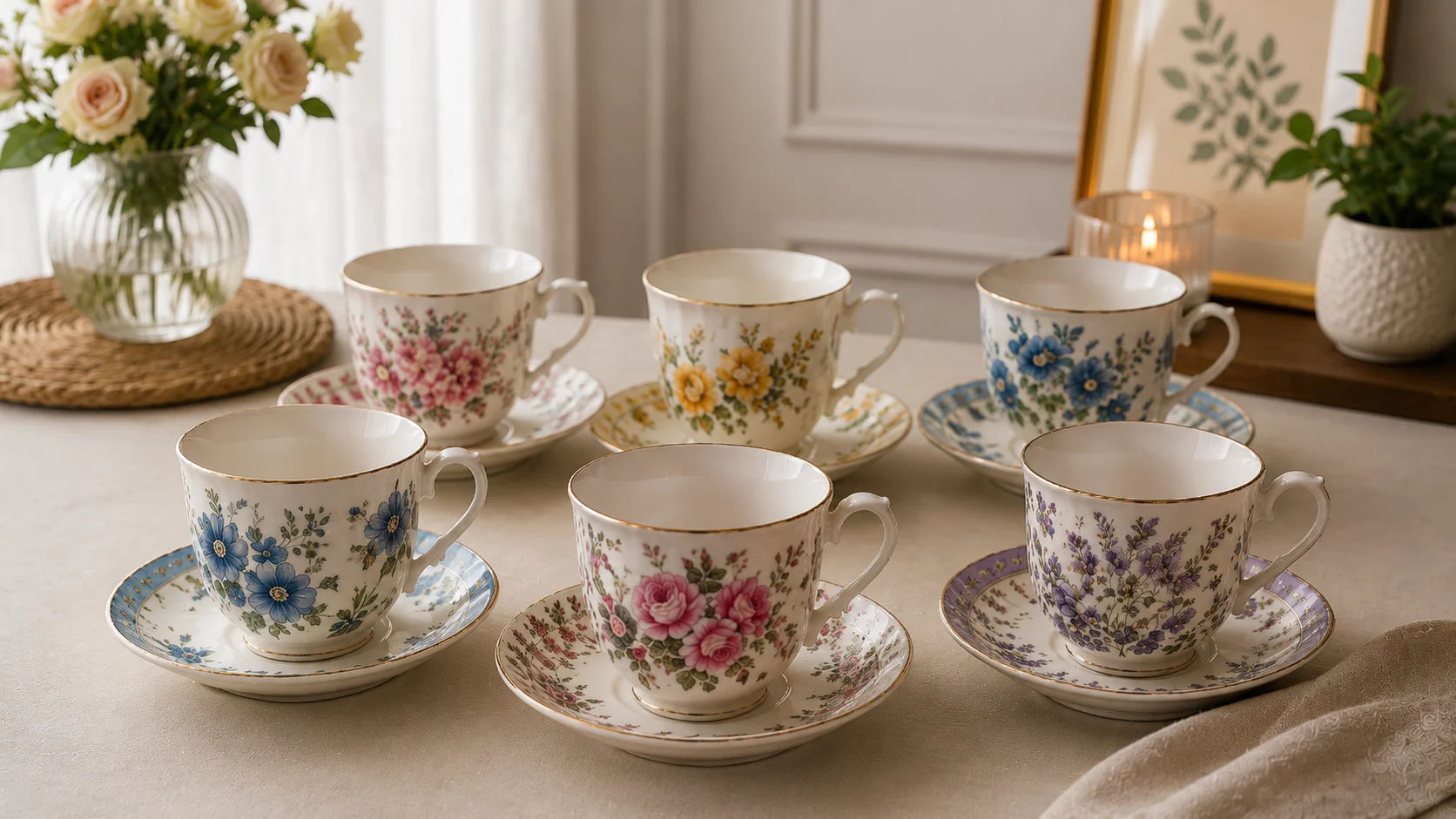
Building a Porcelain Tea Set Around What You Own
Most people already own a dinner set, and the mistake is choosing a porcelain tea set in isolation. Hold the new pieces against the old ones mentally before ordering.
Whites vary more than you’d think. A cool blue-white cup beside a warm ivory plate looks accidental in daylight, even though both are technically white. If your crockery is warm-toned, ask which white the range uses, and order one piece before committing to twelve.
Matching porcelain cups across a full set is the safest choice for replacement too. Ranges get discontinued, and a set of six matching porcelain cups is very hard to top up two years later if the line has gone.
What You Get at Different Price Levels
These bands are indicative for a six-cup set in the Indian market. Specification, not branding, drives most of the difference.
Band
What the body is like
Finish
Realistic use
Entry
Thicker walls, heavier
Simple glaze, occasional pinholes
Daily family use, casual guests
Mid
Even walls, good weight
Clean glaze, embossing or texture
Everyday plus guests, safest all-rounder
Premium
Thin, light, near-translucent
Fine finish, metallic or hand-painted detail
Occasions, gifting, elegant tea tableware
Paying more buys wall consistency, glaze quality and a rim that resists chipping. It doesn’t buy comfort, so check handle shape at every level of a porcelain serving set.
Care That Extends the Life of a Porcelain Serving Set
Porcelain rarely dies of old age. It dies of thermal shock and careless stacking.
1. Warm a cold cup with a little hot water before pouring boiling chai into it, particularly in winter.
2. Never take a piece from the fridge to the microwave, or the reverse.
3. Keep gold, silver and platinum trim out of the microwave permanently, and hand-wash those pieces.
4. Put a felt pad or folded napkin between stacked cups to stop ring-shaped scuffs on the glaze.
5. Lift tea stains with a bicarbonate of soda paste, never a steel scourer.
Handled this way, porcelain tea cups and saucers stay presentable for a decade, which is the honest case for buying once rather than replacing cheap crockery every few years.
Styling Elegant Tea Tableware on an Indian Table
White porcelain is the most cooperative tableware there is. It sits with brass, with banana leaves, with a printed cotton runner, and with the mismatched bowls every kitchen accumulates.
For festivals, keep the cups plain and let colour come from the table: marigolds, a coloured runner, brass diyas. At a formal dinner, a thin metallic band on the rim does more than a busy pattern ever will. For gifting, neutral wins, because a bold design bets on someone else’s taste, while elegant tea tableware in ivory or white suits almost any home.
Frequently Asked Questions
Are porcelain tea cups and saucers microwave and dishwasher safe?
Plain, undecorated porcelain is usually safe for both, but the marking on the base is the final word. Anything with gold, silver or platinum trim must stay out of the microwave and should be hand-washed. Hand-painted overglaze decoration also fades gradually under repeated dishwasher cycles.
How is porcelain different from bone china?
Bone china contains bone ash, making it lighter, whiter and more translucent, and it usually costs more. Porcelain is denser and generally tougher for daily use. For a set that takes boiling chai several times a day and gets washed constantly, porcelain is the more practical of the two.
Do porcelain cups chip easily?
Less than their thinness suggests. Most chips come from stacking, from knocking a cup against a steel sink, or from cutlery dropped into a saucer. Store cups side by side rather than nested, keep a cloth in the sink base while washing, and rims will stay clean for years.
How do I get tea stains out of white porcelain?
Make a paste with bicarbonate of soda and a little water, then work it around the inside with a soft cloth and leave it a few minutes on stubborn marks. Rinse well. Avoid abrasive powders and steel scourers, since the fine scratches they leave trap stains far faster afterwards.
Conclusion
Choosing porcelain tea cups and saucers comes down to a handful of checks rather than a long search. Confirm the material is genuinely porcelain, pick a capacity that matches the tea your household drinks, insist on a saucer with a proper well, and look closely at the rim and foot ring in the photographs. Then think about how the white will sit beside the crockery you already own. Buy six if you’re careful and eight if you host, and choose a range that restocks so one breakage doesn’t retire the set. Shokki Decor offers porcelain tea cups and saucers that can bring an elegant touch to everyday tea time.
If you’re unsure which finish or size suits your table, asking an experienced seller like Shokki Decor for capacities, weights and care details before ordering will save you a return.
Keep reading
Related stories

7 min read
Coffee Cup and Saucer Set: How to Choose Well
A practical guide to picking a coffee cup and saucer set from Shokki Decor: sizes for filter coffee and espresso, materials, lasting designs and easy care.

7 min read
How to Choose an Elegant Tea Cup and Saucer
Choosing an elegant tea cup and saucer from Shokki Decor? Learn how proportion, rim shape, material and size can make your table look right for any occasion.

7 min read
Fine China Tea Cups: How to Choose a Set
Choosing fine china tea cups from Shokki Decor? Compare capacity, shape, patterns and care so you buy a set you’ll actually use, not one kept behind glass.